
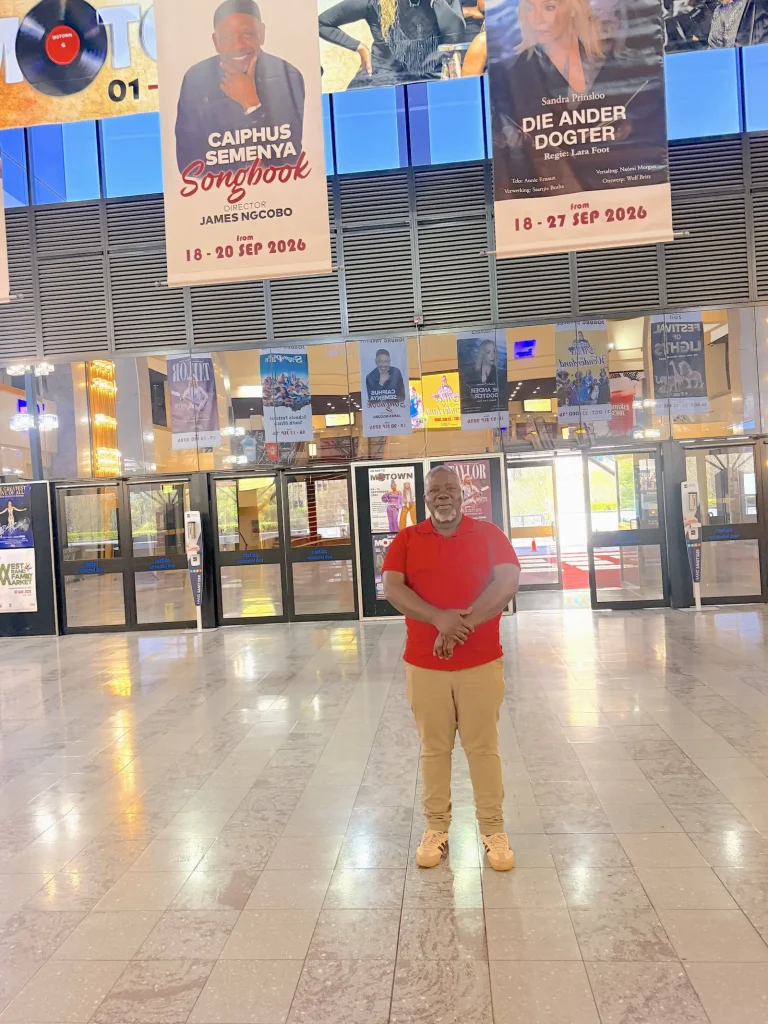
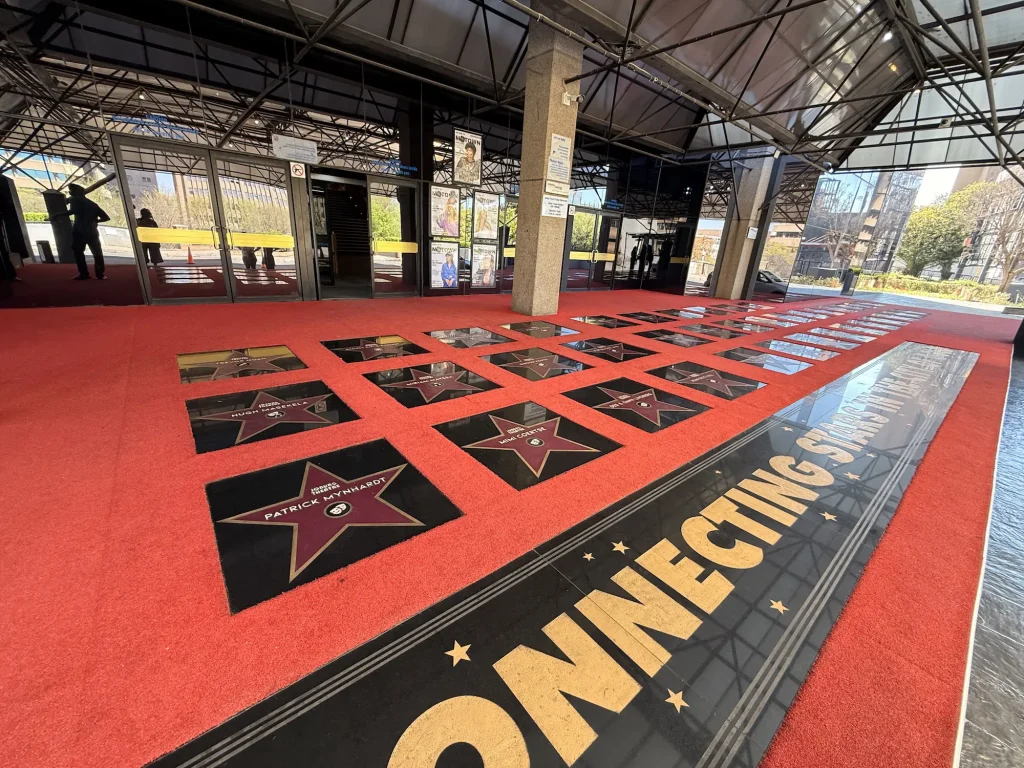
If there is one thing the City of Johannesburg Metropolitan Municipality does well, it is theatre. Step inside the Joburg Theatre Complex, and you immediately feel a sense of excellence. The building is clean and beautifully maintained; there is a line-up of exciting, well-marketed productions, and there is that wonderful feeling of enjoying a night out on the town.
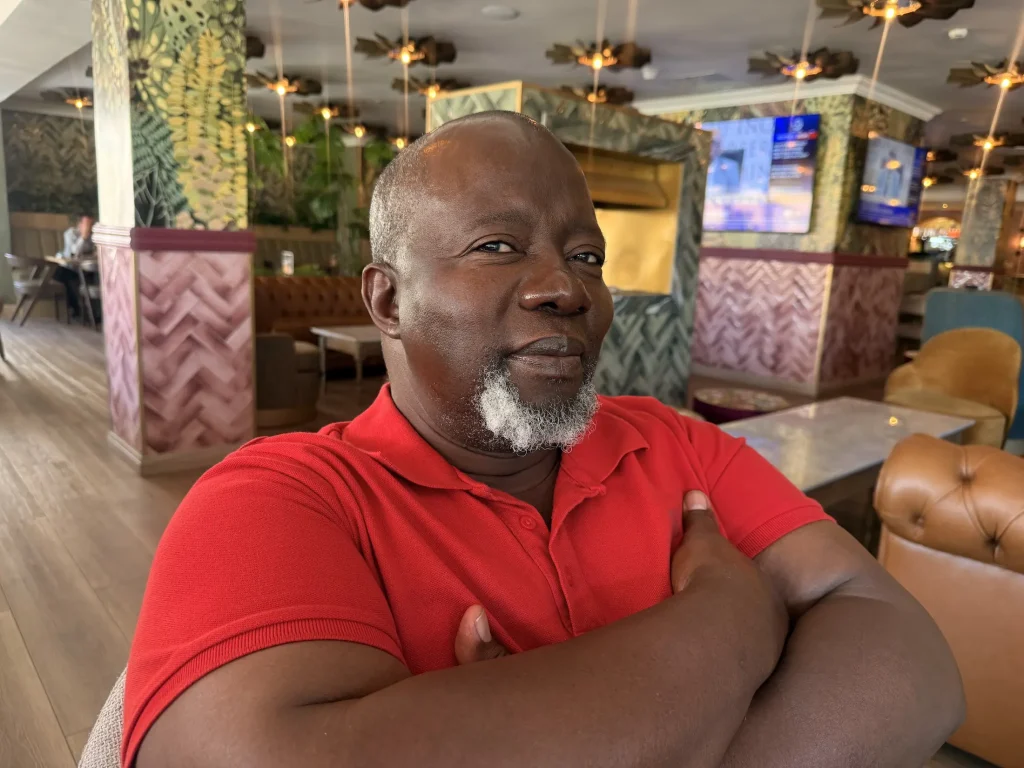
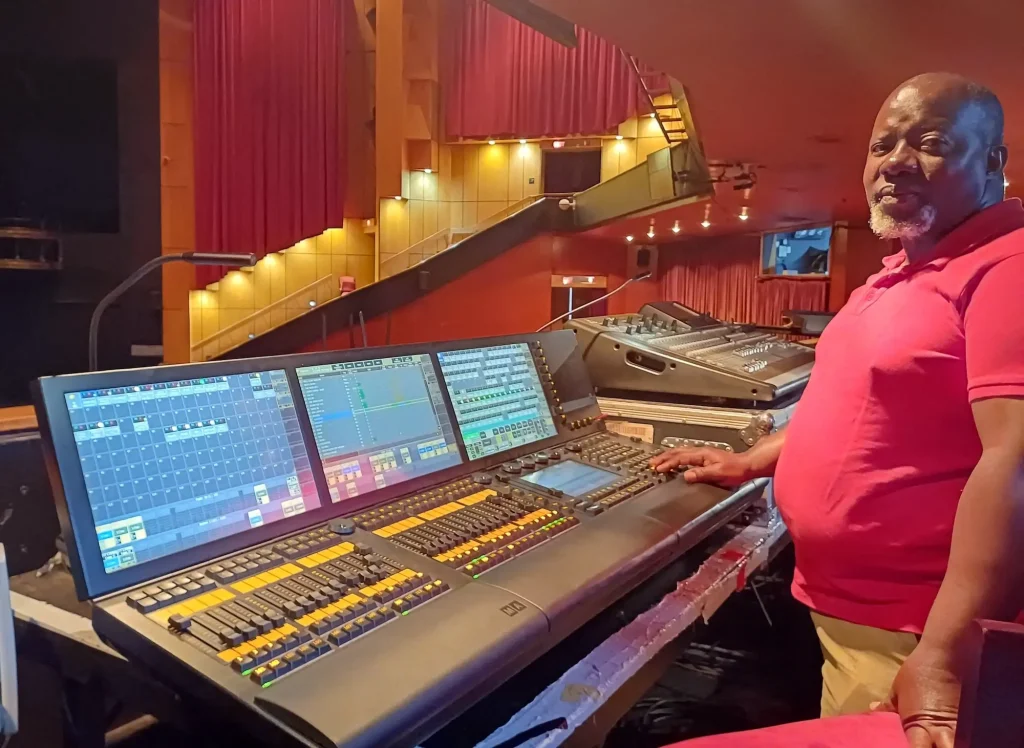
Behind the scenes, a dedicated technical team makes sure the magic happens. At the heart of that operation is Senior Technical Manager Enos Ramoroko, a quiet and steady presence who has helped keep Joburg Theatre running smoothly for more than 30 years.
Born in Rustenburg, Enos moved to Limpopo when he was about eight years old and spent much of his childhood between Alexandra in Johannesburg and Limpopo.
His childhood was very different from today’s youth. There was no electricity at home, television was rare, and everyday life meant finishing chores before darkness fell.
He also remembers the unrest of 1976 from the perspective of a young child. The Soweto Uprising saw students protesting against the apartheid government’s instruction requiring Afrikaans to be used as a language of instruction in black schools. Students were already receiving an inferior and underfunded education, and now they would be learning in a language that was not their own.
“The first time I heard that there was a strike was when they chased us out of the classroom,” he recalls. “We had to jump out of the windows.”
Those were frightening days. Enos remembers hearing about people being shot and seeing the events reported in newspapers, although as a young child he was not directly involved in the protests. “It was horrible. It was terrible,” he says.
Still, politics never became his passion. Instead, he found something else.
With only a high school qualification, Enos looked for work, and his first job connected him with the Windybrow Theatre (now known as the Windybrow Arts Centre), where he worked as a barman. There, Jane Gosnell, from the Performing Arts Council of Transvaal (PACT), noticed him and offered him an opportunity that would change his life.
“She kind of handpicked me and said, ‘Come join my team as an assistant stage manager.’ So that’s how it all started.”
It was the mid 1980s, during apartheid, but Enos found the theatre environment at the Alexander Theatre (the home of PACT) different to the life happening around him.
“Theatre was quite different. It was refreshing,” he says. “The actors and theatre practitioners were just different worlds.”
He began his theatre career at the Alexander Theatre, where he stayed about three years before moving to The South African State Theatre in Pretoria. There, Enos soon discovered that the technical side of theatre was where he belonged.
“I mean, today the kids come to watch shows and experience theatre. They decide if they love it or if it’s not for them. For me, I was there by chance, and I found that lighting was more in line with what I liked and enjoyed. So I went from being an assistant technician to becoming a lighting technician.”
The State Theatre exposed Enos to large-scale productions, huge sets and the intense pressure of getting a show ready. Technology was far more limited than it is today, but productions had the resources and time to create elaborate stage worlds.
For Enos, those demanding days were part of the excitement. He recalls the team running around like ‘mad chickens’. In those days, people like Nick Michaletos were the theatrical lighting designers. There were huge sets and large crews, with people enjoying what they were doing. It was not uncommon for an opera to take place one evening and, immediately after the curtain closed, for the team to strike the set and prepare the stage for the next performance the following night, with the crew getting just a couple of hours of sleep.
There were budgets and resources. “It was a different time,” he recalls. “We had like a two-week move-in of a show. Today, we’re lucky to have two days of moving in.”
Eventually, his career brought him to Joburg Theatre, where Frank van den Berg recruited him as a lighting technician. The theatre was smaller than the State Theatre, and Enos admits that he initially missed his former workplace. But Joburg Theatre soon became home.
During his years at Joburg Theatre, Enos also reconnected with Dan Riley, who worked at Strand and Calite at that time, whom he had first met earlier in his career while working at the Alexander Theatre.
That relationship continued over the years, eventually bringing Enos into contact with Dan’s sons, Duncan and Bruce Riley, now of DWR Distribution.
They also helped introduce Enos to new technologies, which he progressively incorporated into the theatre over the years. The theatre has continued to keep pace with important developments, including L-Acoustics sound, MA Lighting control, DiGiCo audio consoles and Robe Lighting, all of which are maintained in excellent working order.
“The service I’ve been getting from DWR has been second to none,” says Enos.
One of the biggest changes at the Joburg Theatre has been the use of LED screens, particularly in the much-loved pantomimes, where digital imagery can now replace large traditional sets. For Joburg Theatre, the move was also practical. Sets previously had to be imported from the UK, adding considerable cost and logistics to productions. “With LEDs, you’ve got them in-house, and you can use them whenever you need them,” explains Enos. The technology has brought greater flexibility while also saving money, time and space.
Although Enos has spent his career surrounded by technology, his creativity is now finding another outlet.
He has developed a growing interest in set building and set design and enjoys working with his hands at home. “I do everything. I do plumbing, I do electrical, I do tiles and everything,” he says. He enjoys watching the Discovery Channel for inspiration and has found something deeply satisfying in building and fixing things himself.
“I found that this handyman thing has got me,” he laughs.
That creative streak also runs through his family. Enos has two sons, both studying fine art. His sons have also helped out at the theatre as casual workers, giving them an opportunity to experience the environment that has shaped their father’s career.
Next year, Enos will be eligible for retirement, bringing the possibility of a new chapter after more than three decades at Joburg Theatre.
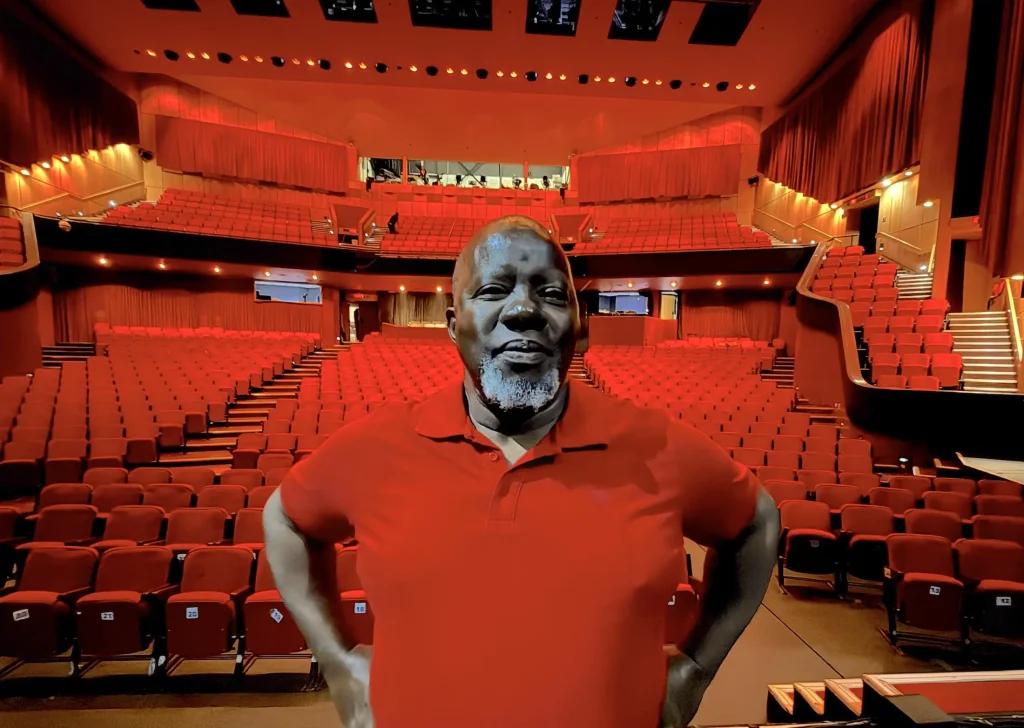
In the same way a great tree does not need to make noise to make an impact, standing firm, growing through the seasons and providing strength and shelter to everything around it, the same can be said about Enos Ramoroko.
A man who has never been one to seek attention, his contribution is and will be difficult to overlook. His roots at Joburg Theatre run deep, and when the time comes for him to leave, the space he leaves behind will be felt.