Someone once said that we don’t stop often enough to celebrate our victories, to pause, take a breath and take it all in. Life moves quickly, and there is always another show, another deadline and another challenge waiting around the corner.
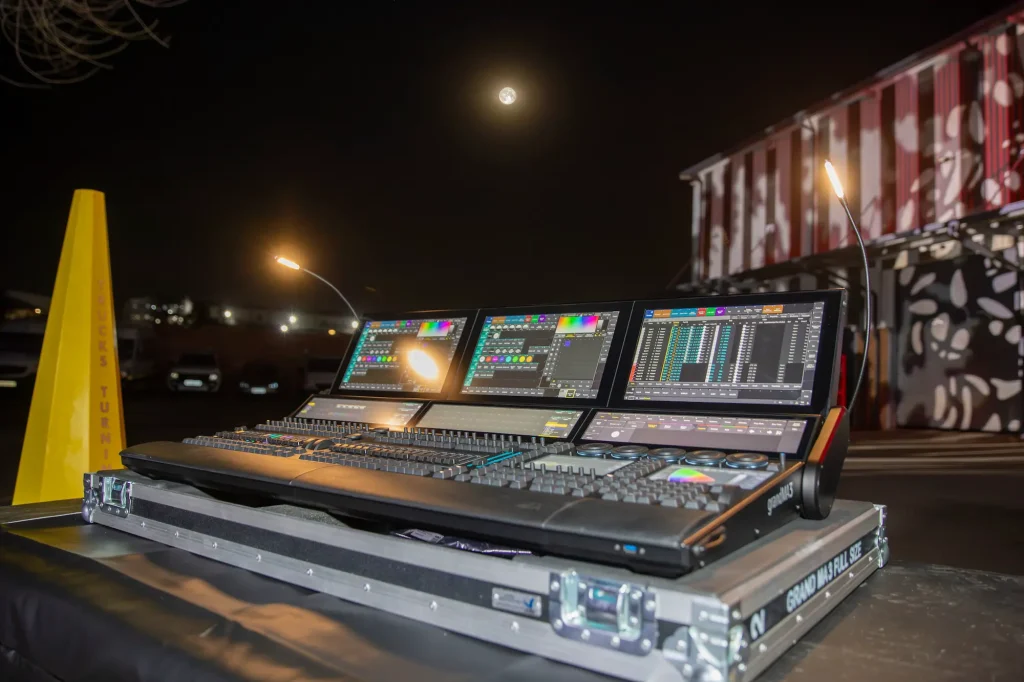
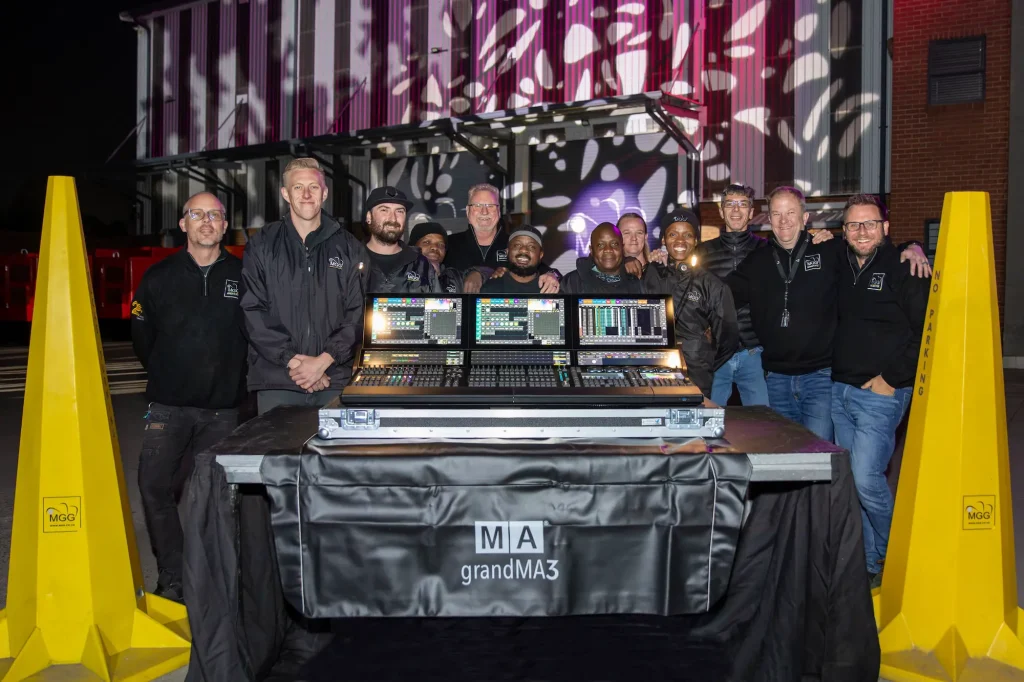
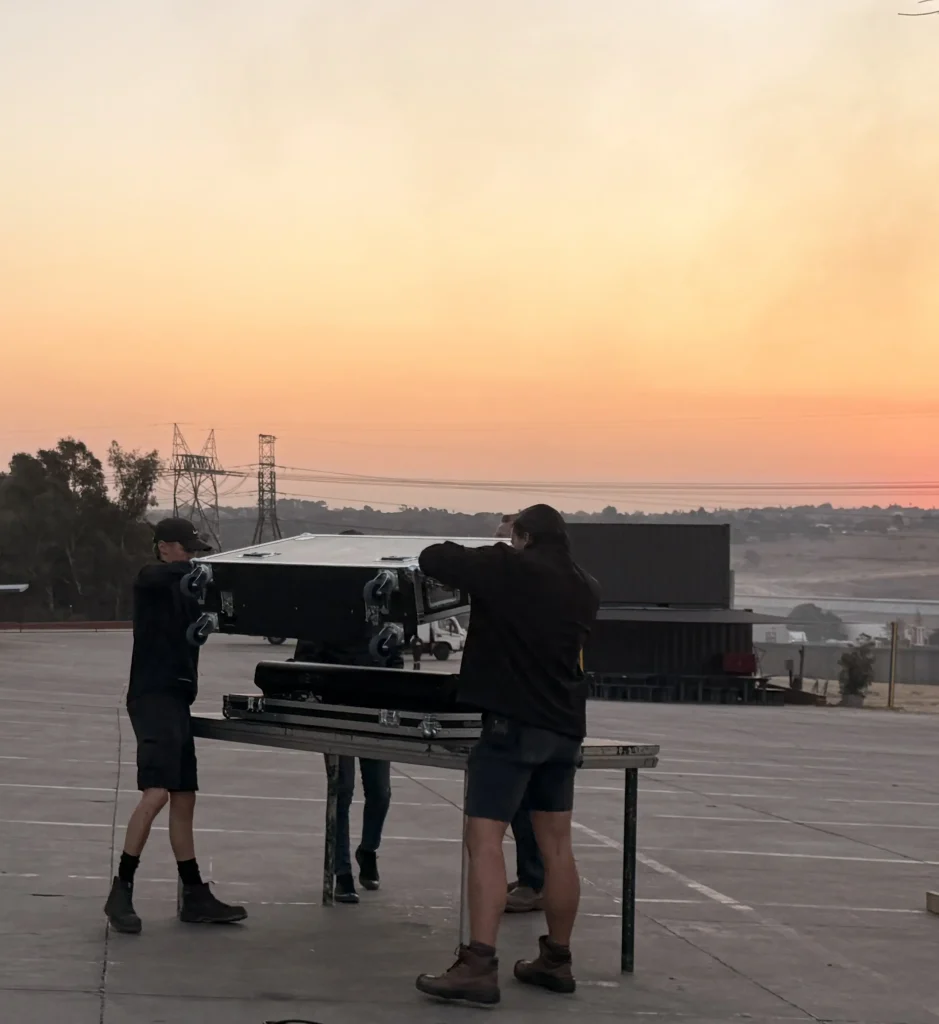
At sunset at MGG’s offices, however, there was a moment worth stopping for. The crew gathered around as they unwrapped the company’s newest acquisition, a second grandMA3 full-size console from DWR Distribution. It was more than another piece of equipment. It was a chance to slow down, talk, and acknowledge the MGG team, while hearing how the company began with a single lighting console and has grown into one of South Africa’s respected technical production companies.
“To watch MGG over the years has been amazing,” said Duncan Riley. “I’ve known Mark Gaylard, founder of the company, for such a long time, going back to when he was still at school and hiring gear from Cal Morris at Calite. It’s wonderful to see what he has achieved and how he has kept his head despite the growth. It’s always a pleasure working with the entire MGG team.”
From a Leap Frog to grandMA3
Mark’s first console was a Zero 88 Leap Frog, purchased from Ian Blair at Prosound.
“Each finger had a wheel to do the programming. It didn’t have a trackball, and you had to programme each step on a very simple effects engine,” Mark recalls.
There were three Leap Frogs, a Cue Commander and then an Avolites Pearl with its famous roller cue. Eventually came a grandMA full-size.
“And it still works,” Mark says with a smile. “We still have our MA2s and have actually just spent a bit of money upgrading the motherboards to keep them going.”
In the early days, there wasn’t much lighting design. “You just drew it on paper,” says Mark. His path could have led him towards being a lighting designer. Mark remembers, with a grin, a band that wanted him to light for them.
“It was amazing, but it was just too much. I burnt myself out. I was loading shows myself, and I was working for other companies. There were things like driving back from Sun City at 3am then arriving back to load another gig in. I wish I had the energy still!”
But he worked hard and enjoyed the lighting, but also loved sound. When AV came along, it was easy to get into the market because projectors came in cheaper, and soon MGG could cover all three disciplines.
For MGG, it isn’t simply about buying the latest technology. It is about investing in platforms that deliver and serve clients over many years.
Twenty-six years after those early days, MGG has grown considerably, with a team Mark trusts to make decisions, challenge ideas, and identify opportunities for growth. He looks at how the operation runs, predicts where there is a shortage of equipment, and then the team talks amongst themselves to plan the future.
“Running any business in South Africa is a very special trait,” he says. “Some days are really hard, but what keeps me going is seeing the staff do things that I didn’t even think possible. That’s very rewarding. I love seeing them when you give them the tools and equipment, everything from trucking to manufacturing and equipment for gigs, and then watching it all come together.”
Mark admits that deciding where to invest is never simple. “We don’t have enough capital to do what we want to do, so we have to be really careful about what we need,” he explains. “But things like getting a grandMA3 will give us a saving because we can still rent our other console out and do our shows. We’ve had times when we wanted to rent in an extra console and couldn’t because of a shortage in the country. You can also buy something really cheap, use it and get rid of it, but sometimes it’s about the longevity.”
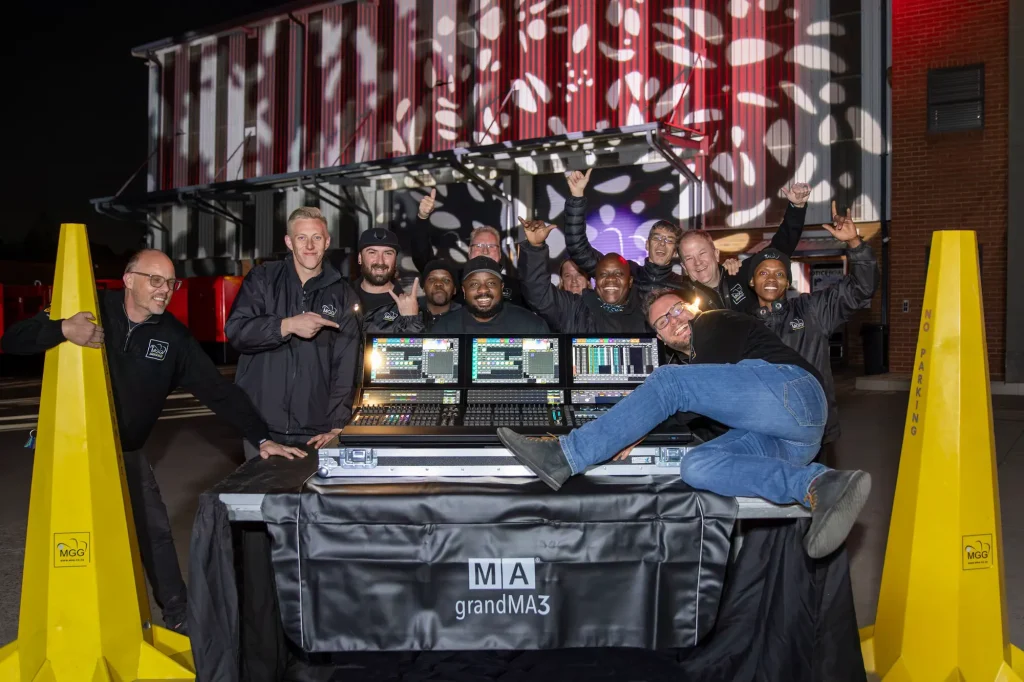
The new grandMA3 brings MGG’s total number of MA consoles to ten and becomes the second grandMA3 full-size in its inventory.
According to MGG’s Nardus De Lange, Technical Manager, the purchase is both a practical and business decision.
“It’s a good purchase, and we see it as an investment for future work,” says Nardus. “The last one was bought about two years ago, and this is going to bring us more capabilities. The industry uses MA, and almost every large show is MA. We have done amazing projects with the console, from big productions to day-to-day events. This is also thanks to the training DWR provides, making the MA platform accessible to operators and freelancers across the country.”
MGG has seen a growing demand, where front-of-house teams require multiple consoles or pre-production service. The company has responded with a studio at its premises, allowing shows to be pre-programmed without taking an MA3 console out of the rental pool.
Pre-programming is important for Mark. He believes it’s a waste of money for a client to hire high end equipment if it’s only going to be used for flashing and busking. He believes the show should be properly programmed to get the most out of it.
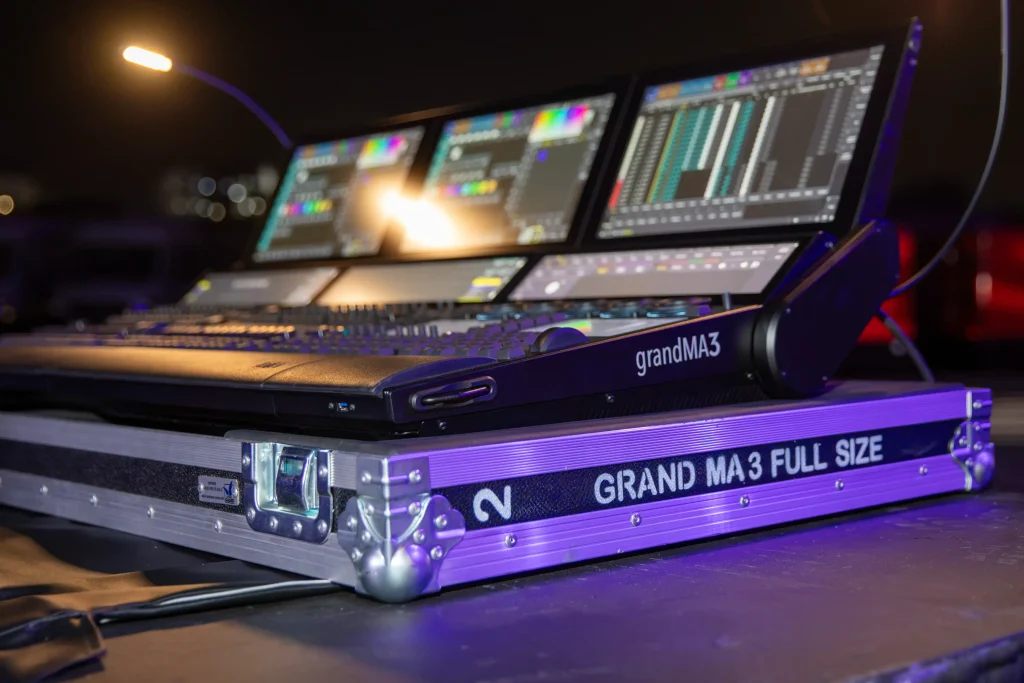
“This year we are spending more time on pre-programming, and the budgets are there,” says Mark. “When we get to a venue, we are not programming and wasting time because there isn’t money for that.” The client also gets a much better idea of what the final show will look like ahead of the event.
For Günther Müller, Project Lead at MGG, the grandMA3 purchase has been something the company has been working towards for some time.
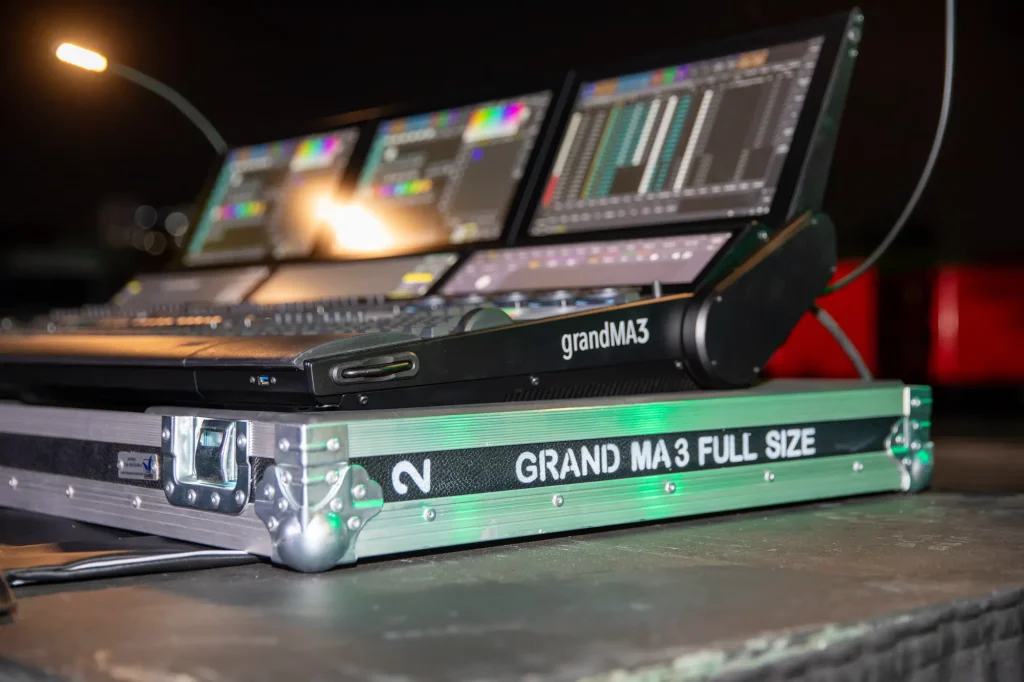
“Our first MA3 full-size has been working non-stop,” says Günther. “We’re getting to the point where there’s a lot of overlap and we need two, so it was an easy decision to go this route. The additional console will be especially valuable during the busy season, while also giving us a reliable backup. And with all the lighting fixtures in our inventory, it makes sense to have the right platform to control them. There are so many reasons for the decision, but it’s also great to know there is enough work in the market for us and that we can rely on MA3 completely. It’s our backbone.”