
Once home to laser tag and line dancing, a forgotten basement in Secunda has been reborn as a fully-fledged performance venue. Thank you Simon Luckhurst from Pro AVL for the write up!
Few people would look at a long-disused basement in the coalfields of South Africa’s Mpumalanga and immediately envisage the potential for a viable future cultural venue, let alone a fully equipped performing arts theatre. But in Secunda, a town better known for petrochemicals than any kind of performance programme, that’s exactly what has taken shape.
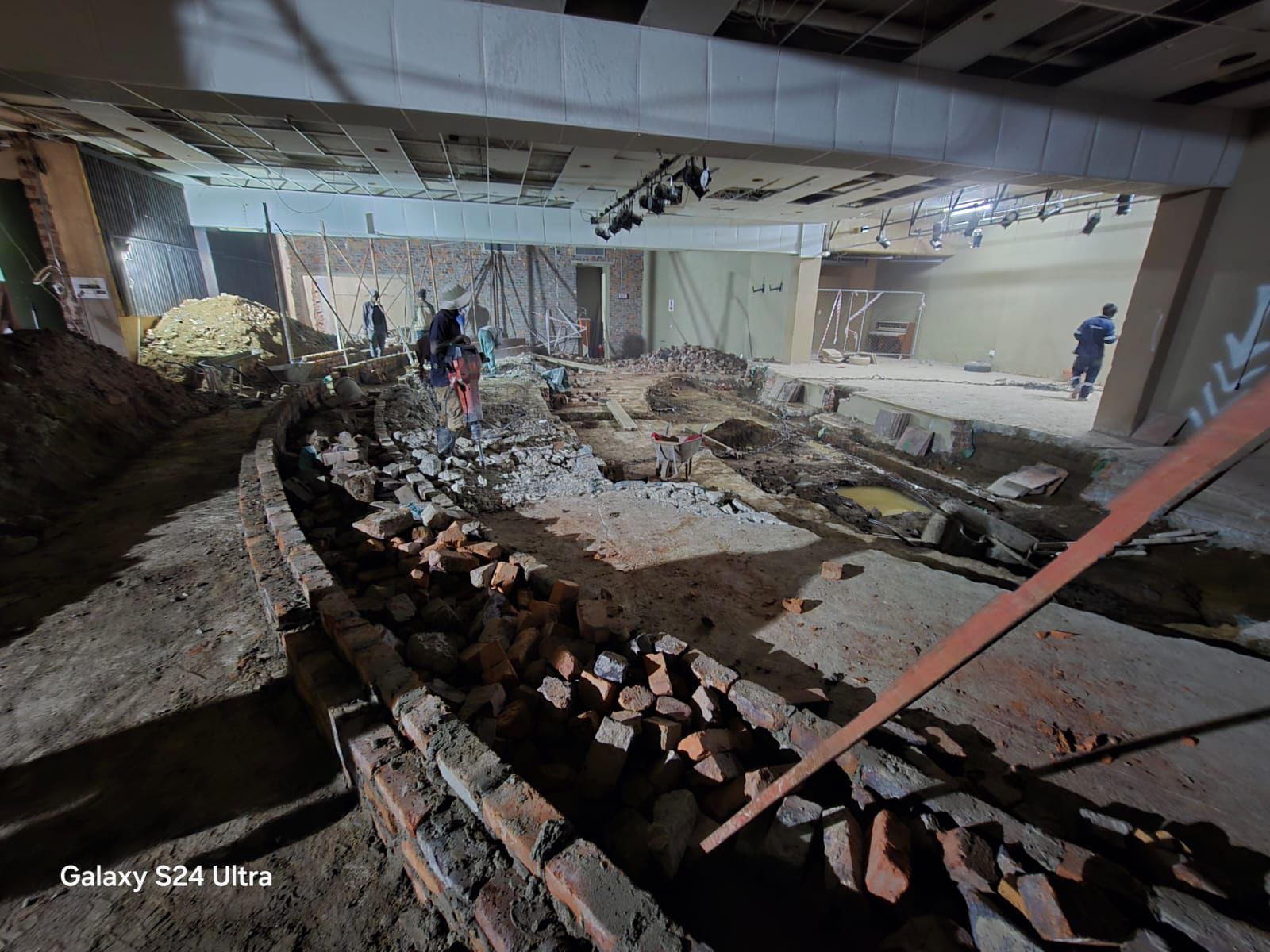
(Above): What everyone had to work with
Spearheaded by Lake Umuzi Waterfront developer Johan Rosslee and arts organiser Alma Swart, and brought to life with assistance from DWR Distribution and South African technical consultant Pieter-Jan Kapp, better known as Kappie, the Umuzi Teater has re-emerged from a concrete shell to become a fully kitted out auditorium ready for musicals, community shows and corporate events.
“This was far from a logical place to build a theatre,” reflects Kappie. “It’s a blue-collar town with little existing infrastructure for the arts. When I saw the basement – which was plagued by low ceilings, had no raked seating and just one flickering fluorescent light, I was very honest about the challenges ahead. But Johan was clear – this was something he really wanted for the community. Once you meet him, you quickly understand that when Johan sets his mind to something, it soon gets done.”
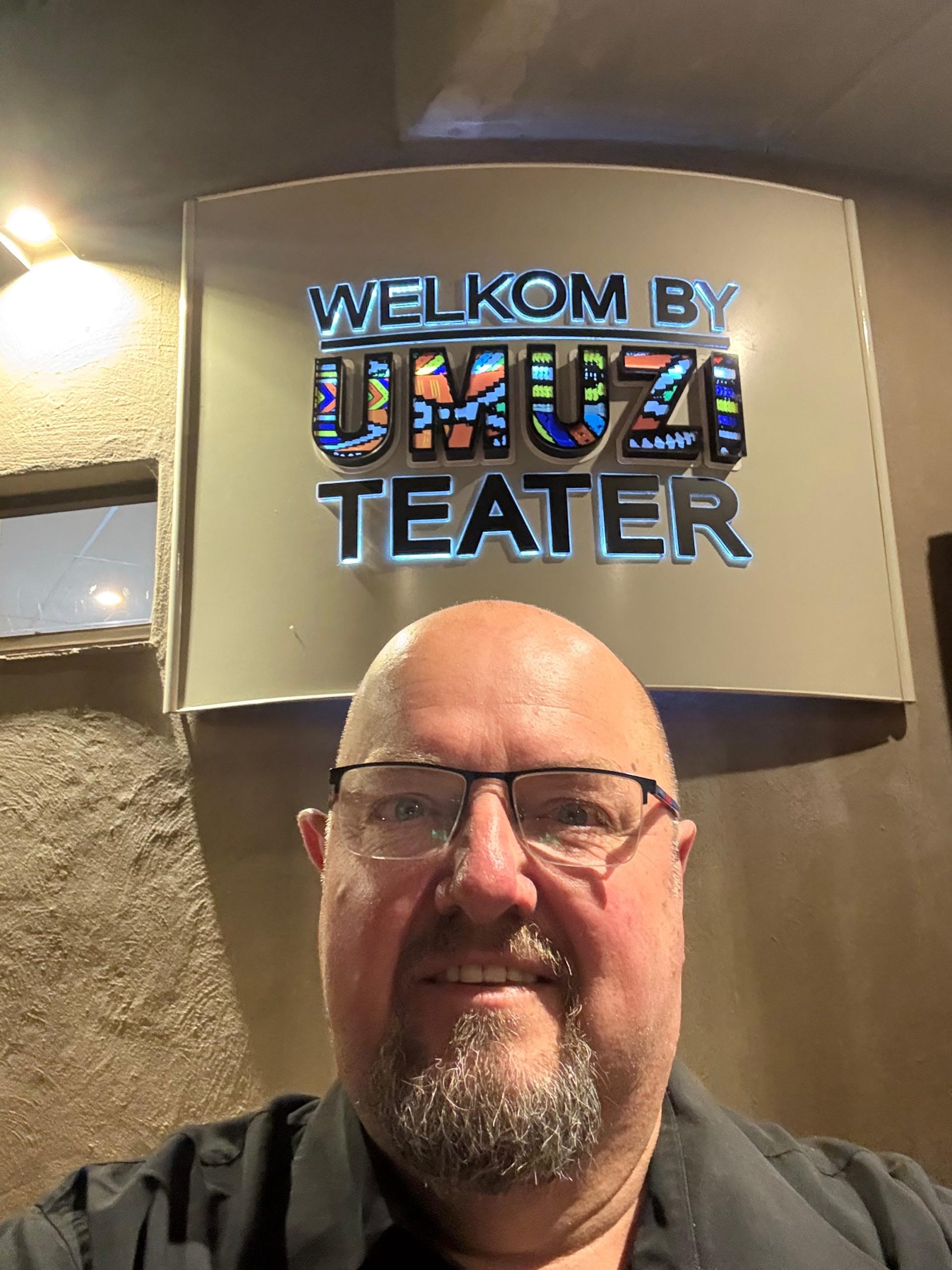
(Above): Pieter-Jan Kapp
Kappie’s involvement followed a referral from artists who had worked with Swart, with whom he had previously collaborated with at the KKNK Festival in Oudtshoorn. Having relocated to Secunda, Swart was determined to bring a proper performing arts space to the town, particularly after the inaugural Umuzi Arts Festival was forced to use makeshift venues in 2024, as that was all that was available. With Rosslee providing both the funding and construction expertise, and DWR handling the technology integration, the plan was set in motion – albeit not without hesitation.
Once the go-ahead was given, transformation of the interior space quickly progressed. “Johan is a builder by trade, so he and his team could make changes on the fly,” explains Kappie. “He basically reconfigured the entire shell to match the technical guidelines we provided. I’ve never worked with a developer who could respond that fast.”
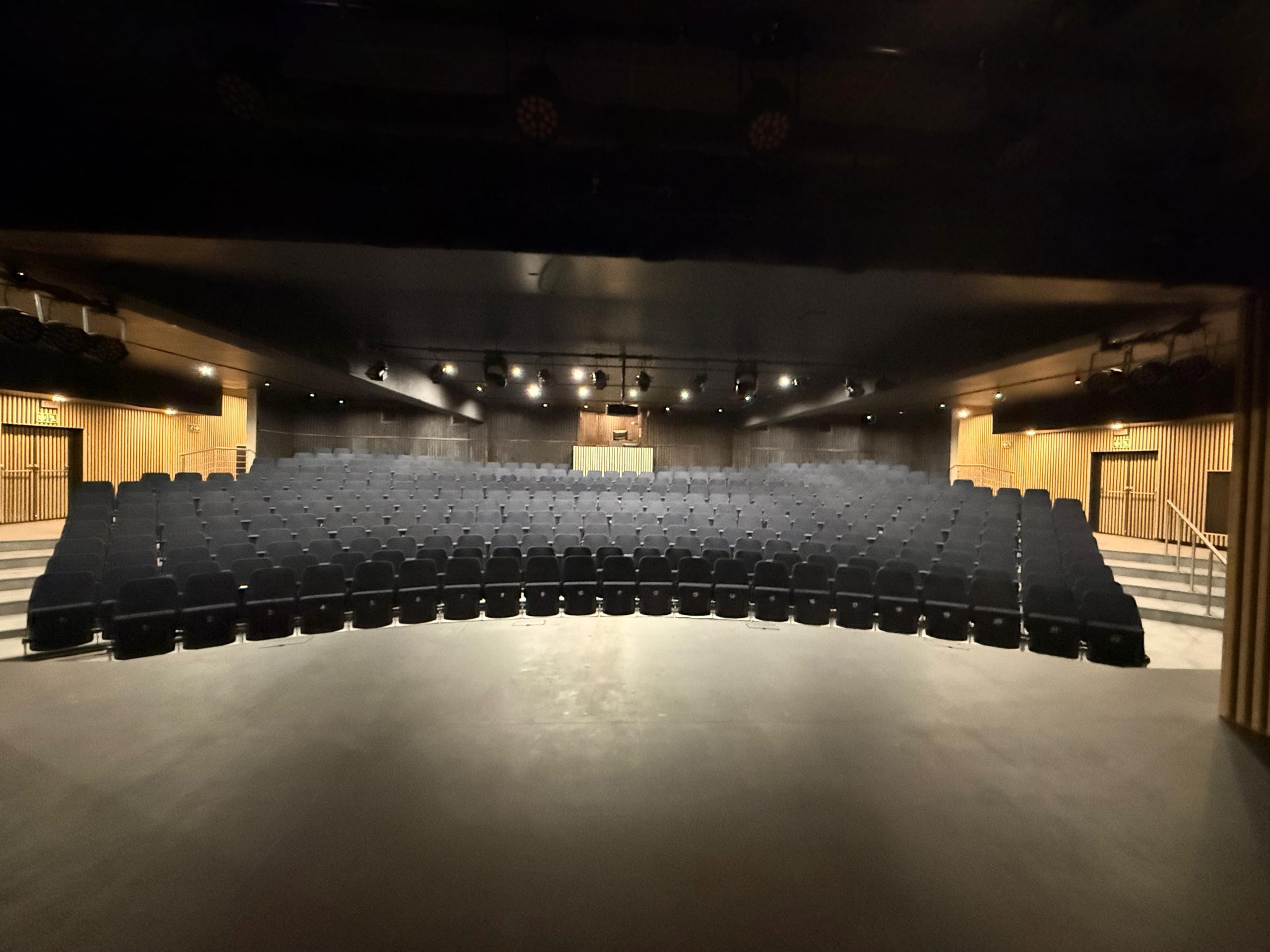
(Above): The intimate venue is a passion project aiming o bring more arts back to Secunda
From the outset, DWR Distribution served as the complete technical supplier. “We were approached by Kappie to support him on this project,” explains DWR’s Kevin Stannett. “From the very first site visit, we offered assistance and advice where needed. Kappie provided a basic inventory list, and then myself and Richard Smith from our audio team selected products based on years of theatre experience, budget, performance and user friendliness. We then coordinated, installed and commissioned the entire project.”
The finished venue now offers tired auditorium seating for approximately 380, geared around an 8.5m x 7m stage and a modest but highly functional technical infrastructure.
Bound by the constraints of the building, headroom still remains limited – a major constraint that shaped the venue’s lighting design.
“There’s no way to get a proper 45° angle on the front lights,” Kappie explains. “So instead of fewer powerful fixtures, we had to go with a greater number of units offering flatter coverage and wider beams.”
The primary lighting system includes eight ADJ Encore Profile 1000 Colour fixtures, 20 Longman F4 UP RGBW PARs (45°), six ADJ Focus Spot 7Z LED moving heads and six Phoenix COB 60° LED cyc bars. These are distributed across custom side lighting bars and FOH positions, supported by a DWR-manufactured motorised 8.5m main curtain track and mounting infrastructure.
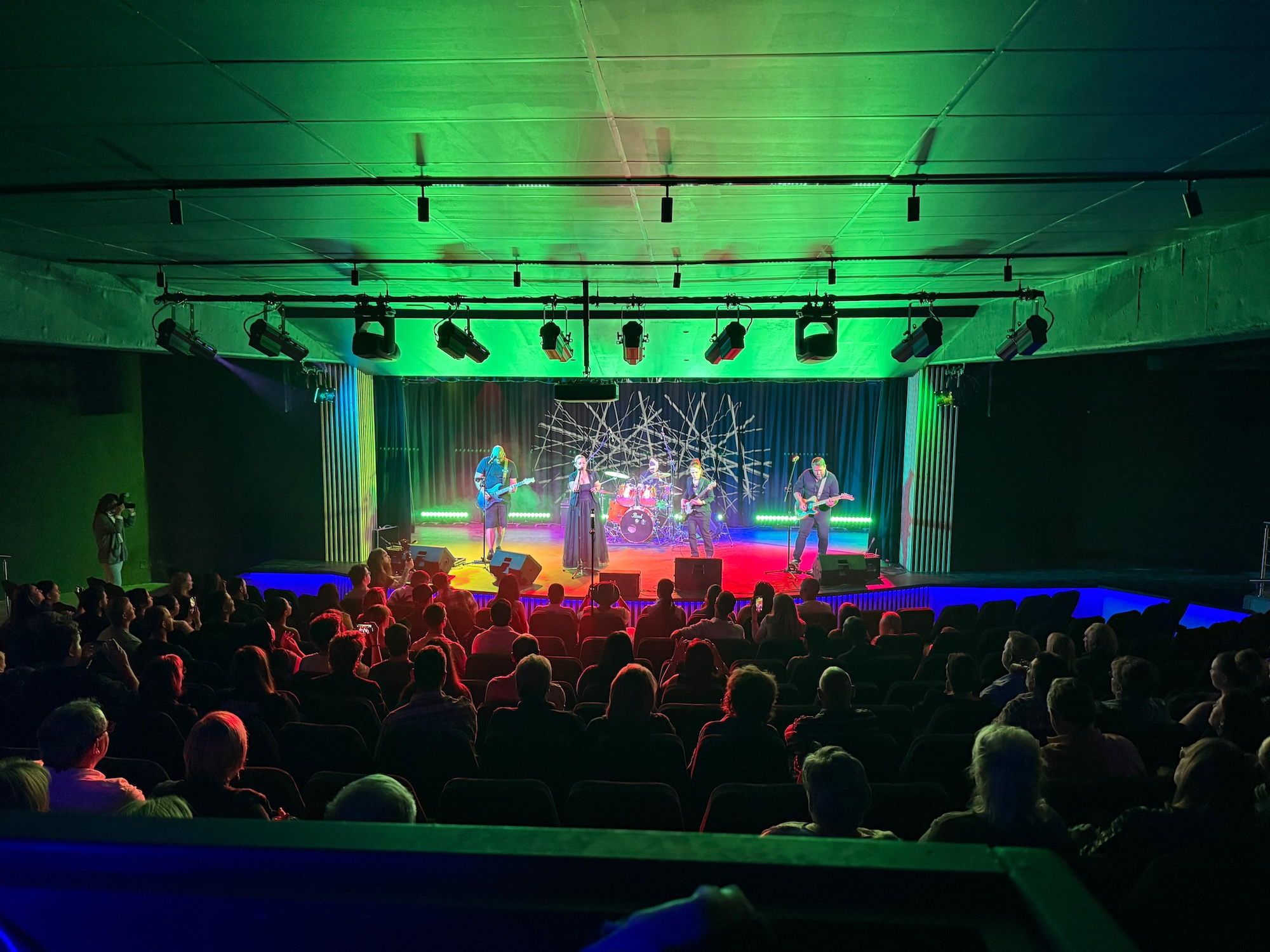
(Above): Clever deployment of gear means that lots can be achieved at Umuzi despite its simple infrastructure
Control of the lighting fixture comes via a grandMA3 onPC Command Wing XT, supplemented by an MDR DMX splitter and extensive DMX and PowerCON cabling. All fixtures are mounted using slimline 300kg-rated half couplers with safety slings and distributed over dedicated 8- and 10-way lighting bars. A Le Maitre MVS Hazer and haze fluid stock round out the atmospheric tools.
The audio system, likewise, attempts to balance discreet visual impact with strong coverage of the wide audience area while mitigating the low ceiling height. “The biggest challenge we had to deal with was the very low roof height and the room acoustics,” confirms Stannett. “But our close working relationship with Kappie meant we could meet in the middle between performance and price. Budget was a key factor, but we were still able to deliver a system that’s fit-for-purpose and easy for the local team to manage.”
At its heart are two flown RCF NXW 44-A full-range loudspeakers, paired with two SUB 18-AX subwoofers and complemented by NX 910-A boxes used for monitoring or fills. Front fill is available as needed but not permanently installed. An Allen & Heath SQ-5 digital mixer forms the control centre, linked to two of the manufacturer’s AB1608 stageboxes, providing 16 inputs and eight outputs each. Six RCF ART 912-A wedges offer foldback on stage.
“The RCF system proposed by DWR looked deceptively simple,” admits Kappie. “It was just two mains, no obvious array, but the boxes are packed with clever tech, and the result was great.”
Microphone support includes four Sennheiser e835 handhelds, a full Sennheiser Evolution Wireless Digital system with handheld and beltpack transmitters, MMD 935 capsules and four headset mics. Additional wired dynamic and condenser microphones include Audix D-series drum kit mics, Sennheiser e904 instrument mics and Audix ADX51 condensers. Signal routing is handled by 10 Klotz passive DI boxes, and all cabling is high-grade XLR and Neutrik EtherCON.
To increase flexibility of what is also a rentable space, the DWR team specified an Epson EB-PU1008B 8,500-lumen laser projector with ELPLM08 mid-throw lens that feeds an existing drop-down screen in the auditorium and, when required, can also act as a scenic backdrop for performances. The venue’s low ceiling, though, made placing it particularly tricky. HDMI distribution is managed via a Blackmagic ATEM Mini Pro switcher and Alfatron HDBaseT extenders, supported by a Cat 6 AV and control backbone throughout the venue.
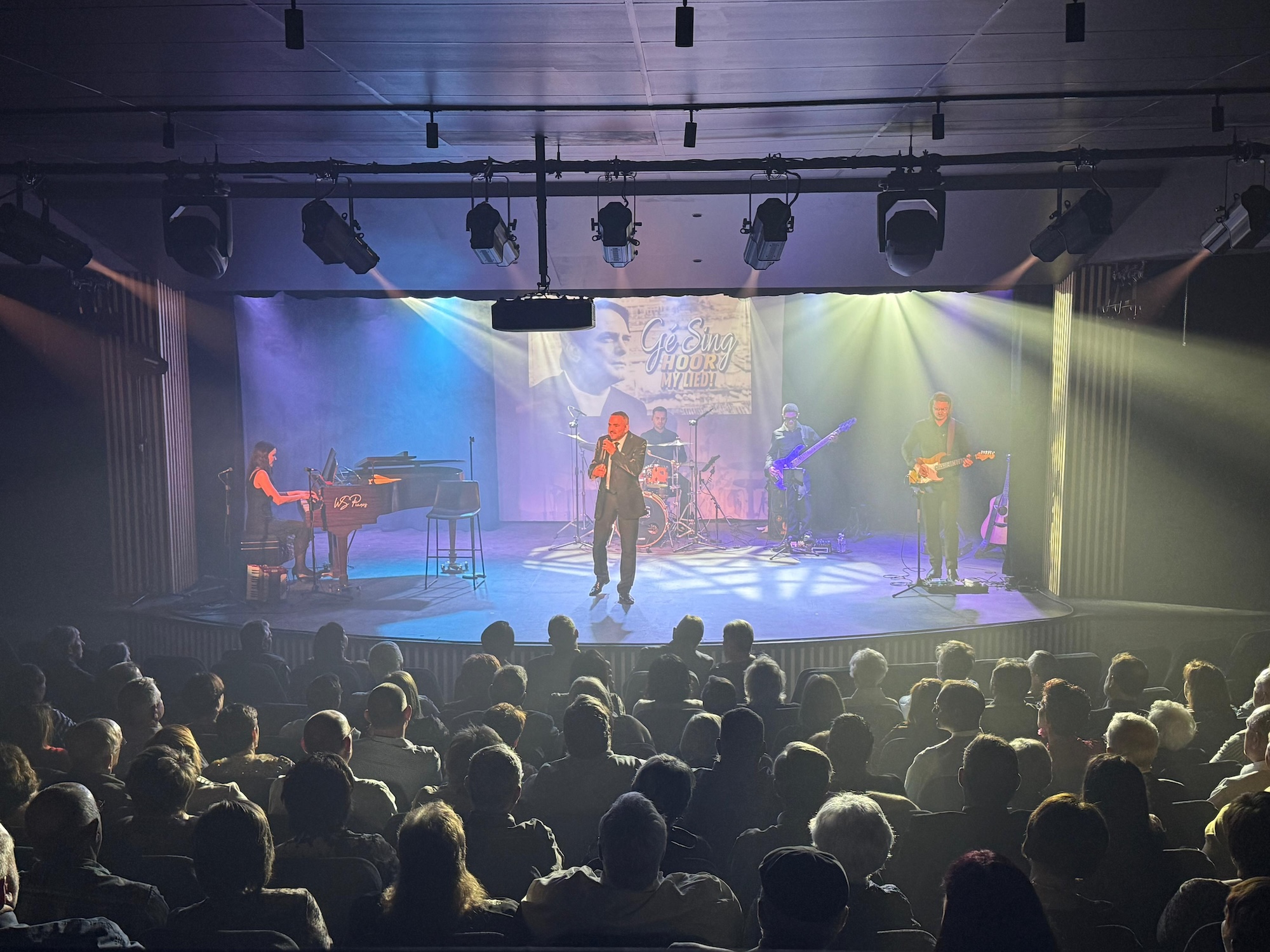
To ensure the local team operating the space was fully up to speed with the new infrastructure, DWR sent in-house trainers to support the technical handover. “Jacques Pretorius on lighting and Jaco Beukes on audio – two of our top trainers – did extensive sessions with the crew on-site,” says Stannett, “and returned the following week to assist with the setup for the theatre’s first major event.”
With the final install completed in early September, a soft launch event for Umuzi staff and their families took place on the 14th, followed by the official theatre opening in time for the second edition of the Umuzi Arts Festival at the end of the month. Technicians from DWR remained onsite to provide additional training and support throughout.
“There’s no permanent technical team yet,” adds Kappie. “It’s being supported remotely by a few guys from nearby Springs, and Alma’s managing operations for now. But they’ve got a solid start — the tech worked flawlessly at the festival, and the feedback has been great.”
For Kappie, the project marks another unusual but rewarding chapter in a long career of venue and festival consultancy. “You walk into a concrete basement in a town built on coal, and somehow walk out with a functioning theatre. That doesn’t happen every day. I have a lot of respect for what Johan and Alma have done here, and I think the end result is something that involved should be proud of.”
www.staging.dwrdistribution.co.za
www.akeumuzi.co.za
www.pjk.co.za